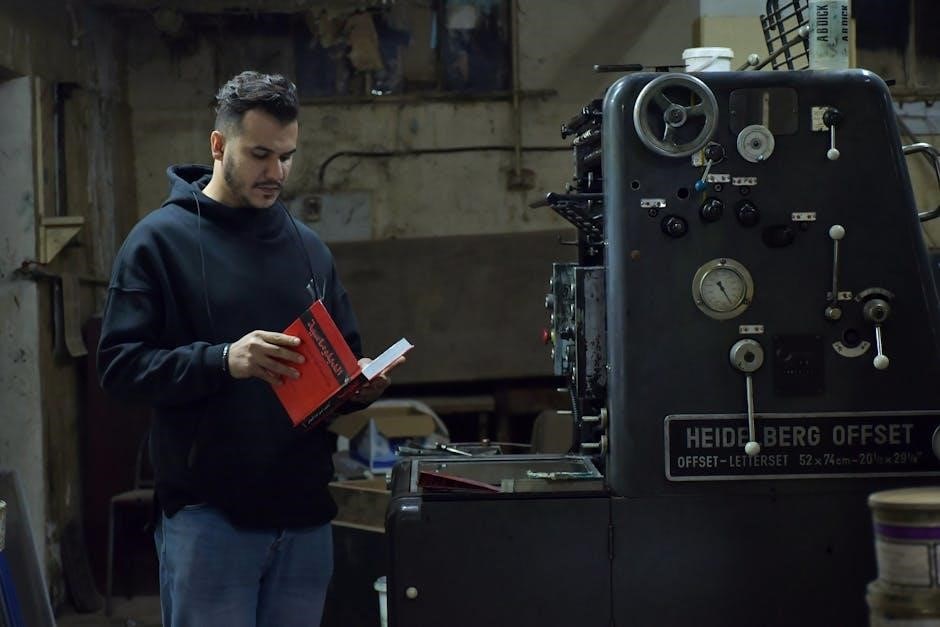
Manual Machine Press: A Comprehensive Overview
Manual machine presses utilize human power for precise force, encompassing arbor, screen printing, and hydraulic types – vital tools in diverse workshops and production lines.
Manual machine presses represent a cornerstone of mechanical operations, offering a blend of simplicity, precision, and cost-effectiveness. These presses, powered by human force rather than motors, have a long history in manufacturing and fabrication. They are incredibly versatile, finding applications in everything from small-scale custom work to supporting roles within larger automated systems.
The core principle behind a manual press is the conversion of manual effort into controlled force. This force is then applied to materials for tasks like forming, bending, pressing, or transferring designs. Different types, such as arbor presses and manual screen printing presses, cater to specific needs, each designed with unique features to optimize performance for its intended application. Understanding their capabilities is crucial for efficient and safe operation.
What is a Manual Press?
A manual press is a machine that utilizes human-powered force to apply pressure to a workpiece. Unlike powered presses, it relies on levers, screws, or hydraulic systems operated directly by a person. This direct control allows for exceptional precision, making them ideal for tasks demanding careful application of force.
The fundamental function involves converting the operator’s effort into a concentrated, downward force. This force is then used for various processes, including forming metal, pressing components together, or transferring ink through a screen. Context dictates the specific type – an arbor press for precise downward force, or a screen printing press for repeatable designs. They are characterized by their simplicity and lack of reliance on electricity.
Types of Manual Machine Presses
Manual machine presses encompass a variety of designs tailored to specific applications. Arbor presses, employing a rack-and-pinion lever, deliver controlled downward force for precision work. Manual screen printing presses facilitate the transfer of ink through a screen onto substrates, crucial for custom apparel and designs.
Beyond these, hydraulic manual presses offer significantly higher force capabilities, suitable for demanding forming operations. Larger hydraulic presses, reaching tonnages like 20 or 30 tons, are used for forming large sheet metal components. The selection depends on the required force, precision, and the nature of the task. Each type provides a unique balance between control, power, and operational simplicity.
Arbor Presses: Precision and Control
Arbor presses are renowned for their ability to apply precise, controlled downward force. Utilizing a lever and rack-and-pinion system, these presses excel in applications demanding accuracy, like small part assembly, riveting, and forming. They are frequently found in machine shops and garages where delicate work is paramount.
Their design allows operators to feel the resistance of the material being worked, enhancing control. Janesville Tool Manufacturing offers adjustable handle models, like the AP-810-AH, with a ½ ton force capacity. These presses are valued for their simplicity and reliability, making them a staple for tasks requiring consistent, repeatable pressure.
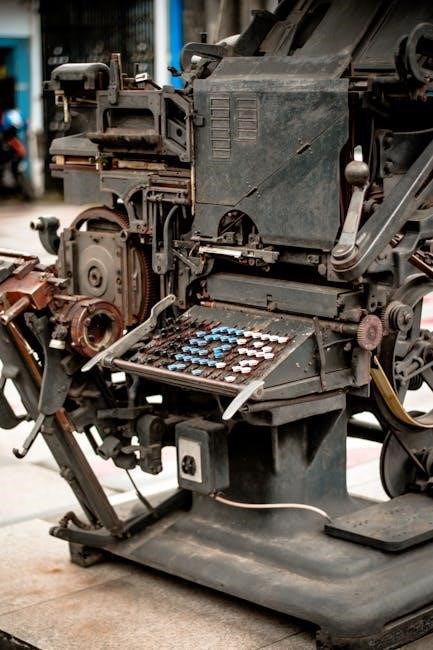
Arbor Press Specifications and Features
Arbor press specifications are crucial for selecting the right tool for a given task. Key features include force capacity, typically measured in tons – Janesville Tool’s AP-810-AH boasts a ½ ton capacity. Stroke length, the distance the ram travels, is 9.5 inches for some models, while throat depth, the space between the ram and the base, is around 2.76 inches.
Base dimensions are also important, with the AP-810-AH measuring 4.06 x 7.06 inches, and overall height reaching 11.63 inches. These specifications dictate the size of workpieces that can be accommodated and the types of operations the press can effectively perform. Understanding these features ensures optimal performance.
Force Capacity of Arbor Presses
Force capacity defines the maximum pressure an arbor press can exert, typically measured in tons. Commonly available models, like the Janesville Tool AP-810-AH, offer a ½ ton (1000 lbs) force capacity, suitable for many precision tasks. This capacity dictates the materials and operations the press can handle effectively.
Higher capacity presses are available for demanding applications, but a ½ ton press provides a versatile balance between power and control. Selecting the appropriate force capacity is vital; insufficient force hinders operation, while excessive force risks damage to the press or workpiece. Careful consideration of the application’s requirements is essential for optimal results.
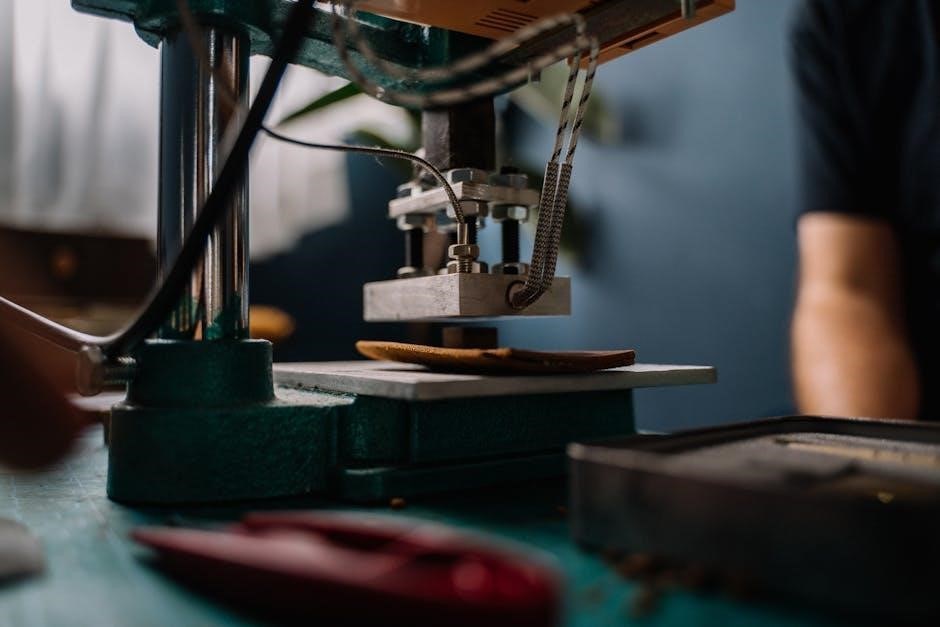
Stroke Length and Throat Depth
Stroke length, the distance the ram travels with each press, is a critical specification. The Janesville Tool AP-810-AH boasts a 9.5-inch maximum stroke length, accommodating various workpiece heights and operational needs. Longer strokes are beneficial for deeper forming or pressing operations, while shorter strokes offer greater control for delicate tasks.
Throat depth, measuring 2.76 inches in the AP-810-AH, defines how far under the ram a workpiece can be positioned. Adequate throat depth is crucial for handling larger parts or performing operations away from the press’s center. Both stroke length and throat depth must align with the intended application for efficient and safe operation.
Base Dimensions and Height
Base dimensions significantly impact a manual press’s stability and footprint. The Janesville Tool AP-810-AH features a base measuring 4.06 x 7.06 inches, providing a solid foundation for consistent operation. Larger bases generally enhance stability, particularly during high-force applications, minimizing vibration and ensuring accurate results.
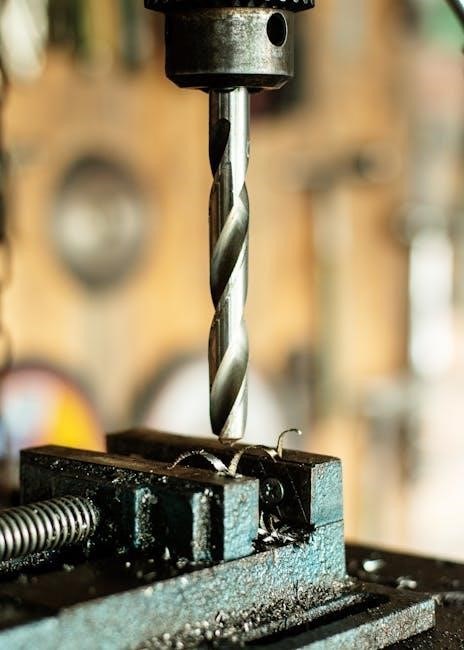
Height, at 11.63 inches for the AP-810-AH, dictates the overall workspace and integration possibilities. A taller press allows for accommodating larger workpieces or tooling. Considering both base dimensions and height is vital for ensuring the press fits comfortably within the available workspace and supports the intended workflow without compromising safety or efficiency.
Manual Screen Printing Presses: For Crisp Designs
Manual screen printing presses are foundational for businesses specializing in custom apparel and designs. These presses expertly align a screen, squeegee, and the printing substrate – like a t-shirt or poster – enabling operators to push ink through the screen’s mesh. This process consistently creates vibrant, repeatable designs with remarkable clarity.
They are particularly crucial for smaller print shops where automation isn’t economically viable. The operator’s skill directly influences the print quality, offering a level of control difficult to replicate with automated systems. Manual presses deliver cost-effective solutions for short runs and personalized projects, making them a staple in the custom design industry.
Applications of Manual Machine Presses
Manual machine presses find widespread use across diverse sectors, demonstrating their versatility and practicality. Small print shops and custom apparel businesses heavily rely on manual screen printing presses for creating unique designs on fabrics and merchandise. Simultaneously, machine shops and garages frequently employ arbor presses for tasks requiring precise, controlled force, such as assembling small parts or pressing bearings.
Beyond these core applications, hydraulic manual presses tackle heavier-duty jobs like metal forming. Even within highly automated facilities, arbor presses maintain relevance due to their precision and simplicity. Their adaptability makes them invaluable tools for both small-scale operations and specialized tasks within larger industrial settings.
Small Print Shops and Custom Apparel
Manual screen printing presses are the cornerstone of many small print shops and custom apparel businesses. These presses facilitate the creation of crisp, repeatable designs on a variety of materials, most notably t-shirts, posters, and other merchandise. The operator skillfully pushes ink through a screen’s mesh, transferring the image onto the substrate with accuracy.
Their appeal lies in their affordability and ability to handle short-run jobs efficiently. Unlike automated systems, manual presses require less upfront investment and are ideal for personalized or on-demand printing. This makes them perfect for businesses catering to individual customers or offering unique, customized products, fostering creativity and responsiveness to market demands.
Machine Shops and Garages
Arbor presses find significant utility within machine shops and garages, prized for their ability to deliver precise downward force. Utilizing a rack-and-pinion lever system, these manual presses excel at tasks requiring controlled pressure, such as pressing bearings, pins, or bushings. Their compact size and straightforward operation make them a valuable addition to any workspace where intricate assembly or disassembly is frequently needed.
Unlike larger, automated presses, arbor presses offer a tactile feel and visual control, allowing technicians to carefully manage the force applied. This is crucial when working with delicate components or materials that could be easily damaged. They represent a cost-effective solution for specialized tasks, enhancing efficiency and precision in repair and fabrication work.
Hydraulic Manual Presses: High Force Capabilities
Hydraulic manual presses represent a significant leap in force capacity compared to mechanical arbor presses, utilizing hydraulic principles to amplify applied effort. These presses, capable of delivering forces up to 30 tons or even higher – as seen in models like the YR27 – are ideal for demanding applications. They are frequently employed for tasks such as straightening, forming, and deep drawing of metal components.
The operation involves manually pumping a hydraulic fluid, building pressure within a cylinder to generate substantial force. This allows operators to tackle heavier-duty jobs that would be impossible with simpler mechanical presses. They are often used in applications involving large sheet metal forming, particularly in materials like titanium and stainless steel, offering a robust and reliable solution.
Manual Presses in Automated Environments
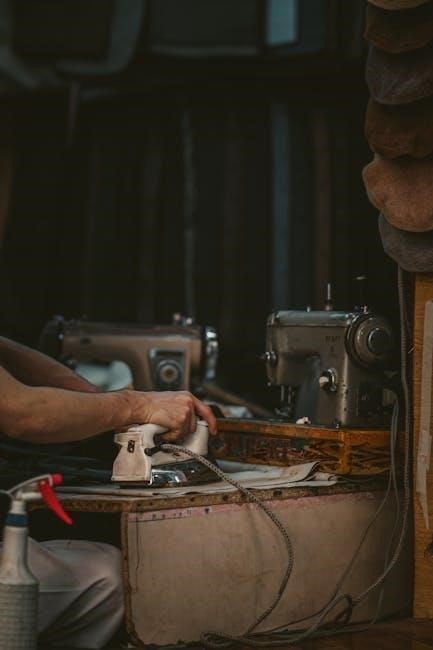
Despite the rise of fully automated systems, manual presses, particularly arbor presses, continue to hold a valuable position even within highly automated, multimillion-dollar facilities. Their persistence isn’t due to a lack of automation options, but rather a deliberate choice based on specific operational needs. Arbor presses excel in tasks requiring precise, controlled force application where the cost and complexity of full automation aren’t justified.
They often serve as dedicated stations within a larger automated workflow, handling specialized operations that benefit from human oversight and adaptability. This hybrid approach leverages the efficiency of automation alongside the precision and flexibility of manual operation, optimizing overall production processes and maintaining a balance between cost-effectiveness and performance.
Advantages of Using Manual Machine Presses
Manual machine presses offer several key advantages, starting with significant cost-effectiveness. Compared to automated or hydraulic alternatives, they represent a lower initial investment, making them accessible for small businesses, workshops, and hobbyists. Beyond affordability, they provide exceptional precision and control. Operators can directly feel and adjust the force applied, crucial for delicate tasks where automated systems might lack finesse.
This tactile feedback allows for greater accuracy and reduces the risk of damaging materials. Furthermore, manual presses are generally simpler to operate and maintain, requiring less specialized training and fewer complex repairs. Their versatility allows for quick setup changes, adapting easily to diverse projects and production runs.
Cost-Effectiveness
Manual machine presses stand out due to their remarkable cost-effectiveness, particularly when compared to automated or hydraulic press options. The initial purchase price is significantly lower, making them an ideal choice for startups, small businesses with limited capital, and individual craftspeople. This affordability extends beyond the upfront cost; operational expenses are also reduced.
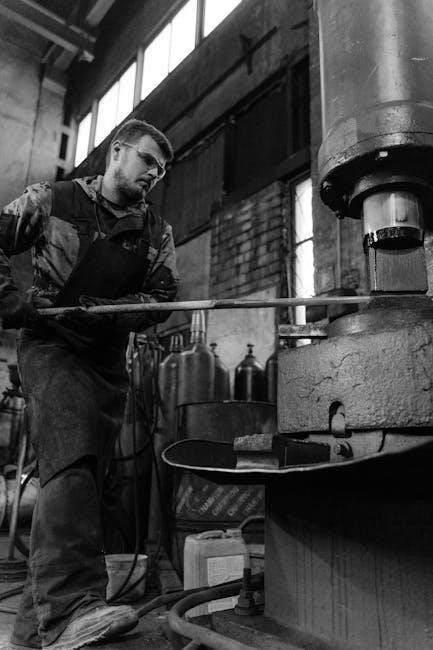
Manual presses require less electricity, minimizing energy consumption and associated bills. Maintenance is typically simpler and cheaper, as they have fewer complex components prone to failure. The reduced need for specialized training further contributes to cost savings. For businesses prioritizing budget-consciousness without sacrificing functionality, a manual press presents a compelling and practical solution.
Precision and Control
Manual machine presses, especially arbor presses, excel in applications demanding high precision and control. The operator’s direct engagement allows for nuanced adjustments and a tactile feel, crucial for delicate tasks. Unlike automated systems, manual presses don’t rely on pre-programmed sequences, offering flexibility to respond to material variations or intricate requirements.
The rack-and-pinion lever system found in arbor presses delivers a consistent, downward force, ideal for pressing, forming, and assembling small parts. This level of control is invaluable in machine shops and garages where accuracy is paramount. Operators can carefully regulate pressure, preventing damage to workpieces and ensuring repeatable results. This hands-on approach fosters a deeper understanding of the process.
Limitations of Manual Machine Presses
Despite their advantages, manual machine presses possess inherent limitations. A primary drawback is the significant physical effort required for operation, potentially leading to operator fatigue during prolonged use or high-volume production runs. This reliance on human power directly impacts production speed, making them less efficient than automated alternatives for large-scale manufacturing.
Furthermore, consistency can be a challenge, as maintaining uniform pressure and speed relies entirely on the operator’s skill and stamina. While precision is achievable, it demands focused attention and can be susceptible to human error. The limited force capacity, compared to hydraulic or power presses, restricts their applicability to lighter-duty tasks. These factors necessitate careful consideration when evaluating their suitability for specific applications.
Physical Effort Required
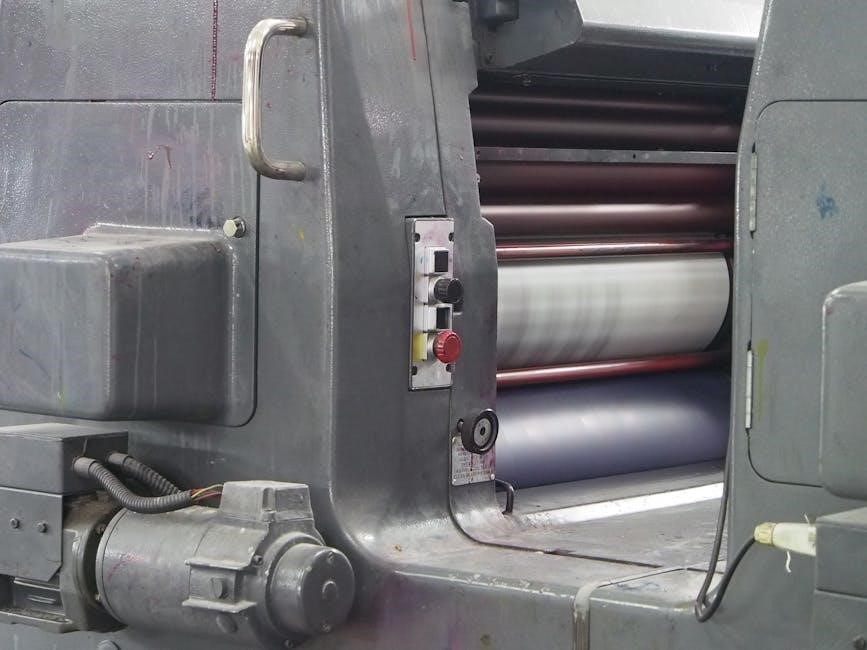
A significant limitation of manual machine presses is the substantial physical effort demanded from the operator. Unlike powered presses, these machines rely entirely on human muscle power to generate the necessary force for tasks like pressing, forming, or printing. This can be particularly strenuous during repetitive operations or when dealing with materials requiring considerable pressure.
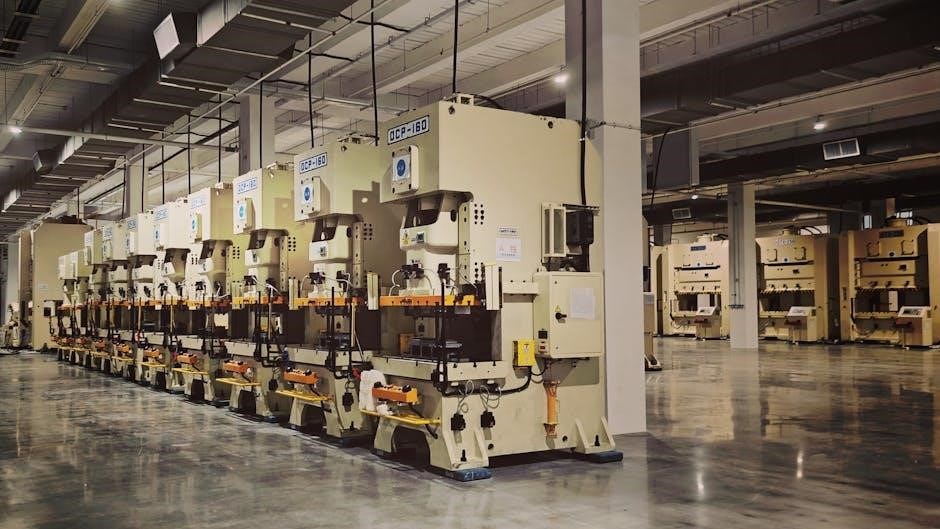
Operators must exert consistent force throughout the stroke, potentially leading to fatigue and reduced efficiency over time. The lever systems, while providing mechanical advantage, still necessitate significant exertion. Prolonged use can contribute to muscle strain and discomfort, highlighting the importance of ergonomic considerations and operator training to mitigate these risks. This physical demand limits sustained production rates.
Production Speed
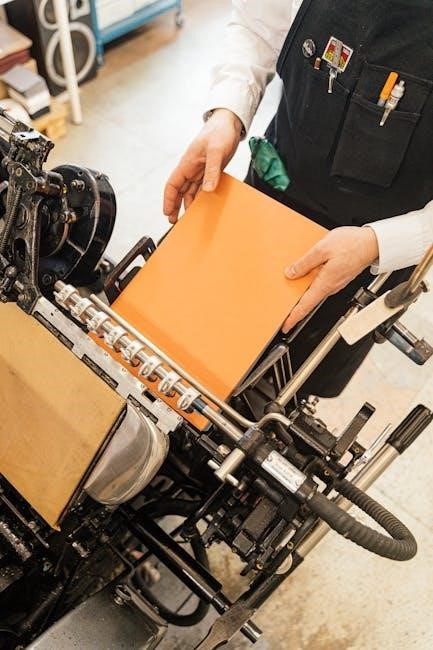
Manual machine presses inherently exhibit lower production speeds compared to their automated counterparts. The cycle time is directly tied to the operator’s physical capabilities and the effort required for each pressing operation. Each part requires manual intervention – positioning, applying force, and removing the finished piece – creating a bottleneck in the production process.
While precision is a benefit, it comes at the cost of throughput. Automated presses can perform cycles continuously and rapidly, significantly increasing output. The reliance on human operation limits the number of parts that can be processed within a given timeframe. This makes manual presses less suitable for high-volume production runs where speed is paramount, favoring instead smaller batches or custom work.
Safety Considerations When Operating Manual Presses
Operating manual presses demands strict adherence to safety protocols. Due to the application of significant force, the potential for injury is present. Operators must always wear appropriate personal protective equipment (PPE), including safety glasses and gloves, to shield against flying debris and pinch points.
Maintaining a clear understanding of the press’s operation and limitations is crucial. Never exceed the specified force capacity. Ensure workpieces are securely positioned before applying pressure. Avoid placing hands or body parts within the pressing area during operation. Regular inspection of the press for wear and tear, and prompt repair of any defects, are essential preventative measures. Proper training and awareness are paramount for safe operation.
Maintenance and Care of Manual Machine Presses
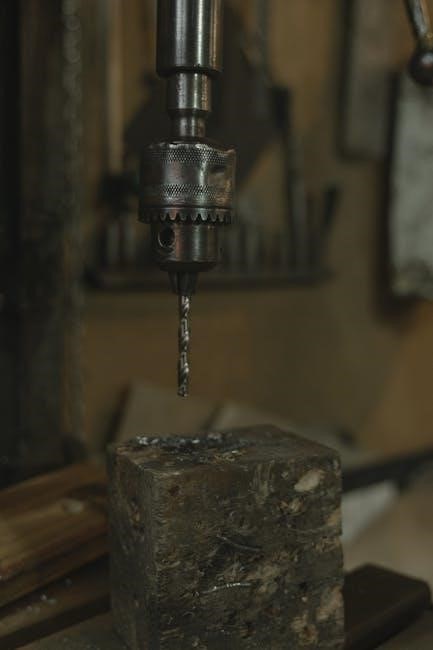
Consistent maintenance is vital for extending the lifespan and ensuring the reliable performance of manual machine presses. Regular lubrication of moving parts – like levers, screws, and pivot points – minimizes friction and prevents wear. Inspect the press frequently for loose bolts, damaged components, or signs of corrosion, addressing any issues promptly.
Keep the work area clean and free of debris to prevent contamination of the press mechanism. For arbor presses, check the alignment of the ram and base. Screen printing presses require cleaning of screens and squeegees after each use. Store the press in a dry environment to avoid rust. Following these practices guarantees optimal functionality and safety.
Future Trends in Manual Press Technology
Despite automation, manual presses aren’t becoming obsolete; instead, they’re evolving. Expect to see increased integration with digital measurement tools for enhanced precision and quality control. Manufacturers are exploring ergonomic designs to reduce operator fatigue and improve usability, focusing on adjustable features and optimized lever mechanics.
Hybrid systems, combining manual operation with automated assistance – like powered return mechanisms – may become more common. Lightweight, yet durable materials are also being investigated to improve portability and reduce overall machine weight. Furthermore, customization options will likely expand, allowing users to tailor presses to specific applications, ensuring continued relevance in specialized manufacturing environments.