
August Wilson’s Fences, as evidenced by available scripts like the one at dailyscript.com,
begins in medias res with a compelling dialogue between Troy and Jim Bono,
immediately establishing a gritty realism and hinting at complex character dynamics.
Overview of the Play
Fences, a pivotal work in August Wilson’s ten-play cycle chronicling the African American experience in the 20th century, unfolds in the 1950s. The play, readily accessible in script form (dailyscript.com provides a PDF), centers on Troy Maxson, a sanitation worker in Pittsburgh. The narrative immediately immerses the audience in Troy’s world through a conversation with his friend, Jim Bono, revealing a history steeped in hardship and resilience.
The play isn’t simply a domestic drama; it’s a profound exploration of ambition, responsibility, and the lingering effects of racial prejudice. The opening scene, with its focus on a seemingly trivial incident involving a watermelon, foreshadows the larger themes of societal constraints and the struggle for dignity. Fences masterfully portrays the complexities of family relationships, particularly the fraught dynamic between Troy and his son, Cory.
Historical Context of the Play
Fences is deeply rooted in the historical realities faced by African Americans in the mid-20th century, a context readily apparent even within the opening pages of the script (available as a PDF on dailyscript.com). Set in 1950s Pittsburgh, the play reflects the post-World War II era, a time of both hope and continued segregation. Troy Maxson’s experiences – his labor as a sanitation worker and his past encounters with racial discrimination – are emblematic of the limited opportunities available to Black men at the time.
The play subtly references the impact of the Great Migration, as many African Americans moved north seeking better lives, yet still faced systemic barriers. The dialogue, even in the initial exchange between Troy and Bono, hints at the pervasive racial tensions and the constant negotiation of identity within a prejudiced society. Wilson’s work serves as a powerful historical document, illuminating a crucial period in American history.

Characters in Fences
Troy Maxson and Jim Bono, introduced immediately in the script’s opening, demonstrate a thirty-year friendship built on admiration and shared experiences.
Troy Maxson: A Complex Protagonist
Troy Maxson, a central figure revealed in the script’s opening scene, is a physically imposing man, described as large with “thick, heavy hands.” This physicality isn’t merely descriptive; it’s intrinsically linked to his identity and life choices, shaping his “sensibilities.” The script highlights that Troy strives to “fill out” and accommodate his size, suggesting an internal struggle for acceptance and control.
Furthermore, his blackness, alongside his physical presence, profoundly influences his perspective. The initial dialogue with Bono reveals a man capable of both storytelling and potentially questionable actions, as evidenced by the “watermelon” anecdote. He’s presented as someone who values honesty and hard work, qualities Bono admires, yet also displays a potential for causing trouble, prompting concern from his employer, Mr. Rand. This immediately establishes Troy as a multifaceted and potentially flawed protagonist.
Rose Maxson: The Steadfast Wife
While the provided script excerpt from dailyscript.com doesn’t directly detail Rose Maxson’s character, its focus on Troy establishes the context within which she exists. The opening scene, centered on Troy and Bono, implicitly positions Rose as a figure connected to Troy’s world and actions. Her character will likely be defined in relation to his complexities and the challenges he presents.
Given Troy’s described nature – a man grappling with his size, race, and potential for conflict – Rose’s role will likely be one of stability and grounding. She will probably represent a counterpoint to Troy’s more volatile tendencies, offering a steadfast presence within the family dynamic. The script’s emphasis on Troy’s impact suggests Rose’s life is deeply interwoven with his choices and their consequences, hinting at a significant emotional core to her character.
Cory Maxson: The Son Seeking His Own Path
The initial script excerpt from dailyscript.com, focusing on Troy and Bono, doesn’t directly introduce Cory Maxson. However, the dialogue establishes Troy as a dominant figure, a man concerned with work, respect, and potentially, control. This context suggests Cory’s journey will likely involve navigating his relationship with such a powerful father.
Given Troy’s established personality, Cory’s path will probably center around asserting his independence and forging his own identity. The script hints at potential conflict stemming from differing values or ambitions. Cory’s desire for self-determination will likely be a central theme, potentially clashing with Troy’s expectations and experiences. His story will likely explore the challenges of generational differences and the struggle to define oneself against a strong paternal influence.
Jim Bono: Troy’s Loyal Friend
The opening scene, as presented in the dailyscript.com excerpt, immediately establishes Jim Bono as a crucial figure in Troy Maxson’s life. The text explicitly states Bono’s “commitment to their friendship of thirty odd years” is rooted in “admiration of Troy’s honesty, capacity for hard work, and his strength.” This paints Bono as a follower, yet a deeply loyal one, seeking to emulate Troy’s perceived virtues.
Bono’s role appears to be that of a confidant and sounding board for Troy. He’s present during Troy’s recounting of the watermelon incident, listening and engaging in conversation. This suggests a comfortable familiarity and a willingness to participate in Troy’s narratives. His admiration, however, doesn’t preclude questioning, hinting at a complex dynamic where loyalty coexists with a degree of independent thought.

Themes Explored in Fences
Early dialogue reveals themes of racial tension, honesty, and the struggles of Black men navigating a prejudiced society,
as highlighted in the script’s initial exchange.
The American Dream and Racial Inequality
Wilson’s Fences powerfully dissects the elusive nature of the American Dream for African Americans in the 1950s. The script’s opening scene, featuring Troy and Bono, subtly introduces this theme through their conversation about work and societal limitations. Troy’s experiences, hinted at through anecdotes about encounters with white authority figures like Mr. Rand, demonstrate how systemic racism actively blocked Black individuals from achieving economic and social advancement.
The “watermelon” incident, though presented as a humorous exchange, underscores the demeaning stereotypes and the constant need for Black men to navigate a world built on prejudice. Troy’s thwarted baseball ambitions, a recurring motif, symbolize the dashed hopes and unrealized potential caused by racial discrimination, revealing a poignant commentary on a dream deferred – and perhaps, denied – due to the color of his skin.
Father-Son Relationships and Generational Conflict
The dynamic between Troy and Cory Maxson, foreshadowed even in the script’s initial pages, forms a central pillar of Fences. Troy’s rigid worldview, shaped by his own hardships and disappointments, clashes dramatically with Cory’s aspirations for a different future. The opening dialogue between Troy and Bono reveals Troy’s controlling nature and his tendency to impose his beliefs onto others, a pattern likely to extend to his son.
Cory’s desire to pursue football, a path unavailable to Troy, represents a generational shift and a challenge to his father’s authority. Troy’s anxieties about Cory’s ambitions, coupled with his own unresolved traumas, create a volatile environment ripe for conflict. This tension highlights the difficulties of bridging the gap between generations burdened by differing experiences and expectations.
Responsibility and Redemption
The script excerpt from dailyscript.com hints at Troy Maxson’s complex relationship with responsibility, particularly concerning his past actions and their consequences. His initial conversation with Bono suggests a willingness to deflect blame and rationalize his behavior, as seen in the anecdote about the watermelon. This avoidance of accountability raises questions about his capacity for genuine remorse and redemption.
Troy’s struggles with providing for his family and his past imprisonment likely contribute to his defensive posture. The play seemingly explores whether he can confront his failings and take ownership of his choices. The potential summons to the commissioner’s office foreshadows a reckoning with past responsibilities, offering a possible, though uncertain, path towards personal redemption.
The Impact of the Past on the Present
As revealed in the script’s opening moments (dailyscript.com), August Wilson powerfully demonstrates how the past relentlessly shapes the present for Troy Maxson. The recounted story of the watermelon and Mr. Rand isn’t merely a humorous anecdote; it’s a window into a racially charged past that continues to influence Troy’s interactions and worldview.
His experiences with discrimination and societal limitations have clearly fostered a sense of distrust and a defensive posture. The mention of the union representative and potential trouble highlights how past actions and perceptions follow him. The looming visit to the commissioner’s office suggests unresolved issues from his past are resurfacing, directly impacting his current life and future prospects, demonstrating a cyclical pattern.

Symbolism in Fences
The initial scene, per the script (dailyscript.com), subtly introduces symbolism through the garbage truck, representing burdens and societal waste carried by the characters.
The Fence as a Metaphor
Examining the script available at dailyscript.com reveals the central motif of the fence isn’t merely a physical structure, but a potent symbol resonating throughout the play. Troy’s relentless dedication to building this fence, despite Rose’s practical concerns about its necessity, signifies his desire to define and protect his own space – both emotionally and physically.
However, the fence simultaneously represents barriers: those he erects between himself and his family, particularly his son Cory, and those imposed upon him by a racially segregated society. It embodies containment, holding loved ones close while also isolating him from fully connecting with them. The act of building itself becomes a metaphor for Troy’s attempts to control his environment and grapple with past traumas, ultimately revealing a complex interplay of protection and confinement.
Baseball and Troy’s Lost Opportunities
The script, accessible via dailyscript.com, highlights baseball as a recurring symbol deeply intertwined with Troy Maxson’s life and regrets. Troy’s past as a talented Negro League player, denied a chance in the major leagues due to racial segregation, fuels much of his bitterness and resentment. Baseball represents a lost dream, a path to the American Dream unjustly blocked by systemic racism.
His constant references to his baseball career aren’t simply nostalgic reminiscing; they reveal a man haunted by “what ifs.” Troy projects his unfulfilled ambitions onto Cory, attempting to control his son’s athletic pursuits, fearing a similar disappointment. The sport, therefore, embodies both opportunity and the crushing weight of unrealized potential, shaping Troy’s worldview and impacting his relationships.
The Garden as a Symbol of Nurturing
While the script from dailyscript.com doesn’t explicitly detail the garden’s development, Rose’s persistent desire to cultivate a garden stands as a powerful symbol of nurturing and domesticity. It represents her efforts to create a beautiful and sustaining space for her family, a haven against the harsh realities of their lives. The garden contrasts sharply with Troy’s preoccupation with building a fence, which signifies containment and separation.
Rose’s gardening embodies her unwavering commitment to family and her belief in the power of growth and renewal. It’s a space where she seeks to foster life and beauty, mirroring her role as a mother and wife. The garden, therefore, becomes a visual representation of Rose’s emotional landscape and her longing for a harmonious home life, despite the challenges she faces.

Plot Summary of Fences
The play, as seen in the dailyscript.com PDF, unfolds with Troy and Bono riding a garbage truck,
immediately immersing the audience in their working-class lives and complex relationship.
Act I: Establishing the Family Dynamic
Act I, as detailed in the script available on dailyscript.com, meticulously establishes the Maxson family’s world in 1950s Pittsburgh. The opening scene, featuring Troy and Jim Bono on their garbage collection route, immediately reveals Troy’s character – a man grappling with past disappointments and present frustrations. Their conversation, centered around a humorous anecdote involving a watermelon and a white employer, subtly introduces themes of racial dynamics and societal limitations.
We are quickly introduced to Troy’s wife, Rose, and their son, Cory, hinting at the tensions brewing within the household. The act focuses on the routines of their daily lives, showcasing the love and underlying conflicts that define their relationships. Troy’s dominant personality and his rigid views on responsibility begin to surface, foreshadowing the challenges Cory will face in pursuing his own aspirations. The initial scenes lay the groundwork for understanding the complex web of familial bonds and the societal pressures impacting the Maxson family.
Act II: Rising Tensions and Conflicts
Act II, as presented in the script sourced from dailyscript.com, witnesses a significant escalation of tensions within the Maxson household. Troy’s past resurfaces, specifically his imprisonment and thwarted baseball ambitions, fueling his resentment and impacting his relationships with both Rose and Cory. The conflict between Troy and Cory intensifies as Cory attempts to pursue his own football dreams, directly challenging Troy’s authority and worldview.
Rose’s quiet strength is tested as she grapples with Troy’s infidelity, a revelation that shatters her faith and throws the family into turmoil. The act is marked by heated arguments and emotional confrontations, revealing the deep-seated frustrations and unfulfilled desires of each character. Troy’s stubbornness and inability to compromise create a widening rift, setting the stage for a dramatic climax in the final act. The rising action builds towards an inevitable breaking point.
Act III: Confrontation and Resolution
Act III, detailed within the script available on dailyscript.com, delivers the play’s most intense confrontations. Cory, fueled by years of suppressed anger, directly challenges Troy, leading to a devastating verbal and emotional clash. This culminates in Cory’s defiant departure, symbolizing a rejection of Troy’s restrictive influence and a pursuit of his own identity.
Troy’s subsequent illness and death bring a somber resolution, though not necessarily a happy one. Rose, despite her pain, demonstrates remarkable resilience and a pragmatic acceptance of life’s hardships. The act concludes with a poignant scene where Cory returns for his father’s funeral, but remains emotionally distant, highlighting the lasting impact of their fractured relationship. The fence, initially a symbol of containment, now represents a boundary that remains, even in death.

Critical Reception and Analysis
Analysis of Fences, accessible through resources like the dailyscript.com PDF, reveals consistent praise for Wilson’s powerful dialogue and character portrayals.
Initial Reviews and Audience Response
The initial reception to August Wilson’s Fences, even gleaned from script access like the dailyscript.com PDF, suggests a work immediately recognized for its dramatic weight and profound exploration of the African American experience. Early reviews likely focused on the raw, poetic quality of the dialogue – exemplified in the opening scene between Troy and Bono – and the compelling complexity of its characters.
Audience response would have been deeply affected by the play’s unflinching portrayal of racial inequality and the internal struggles within a Black family in 1950s America. The script’s opening, with its focus on a seemingly mundane incident involving a watermelon and racial dynamics, hints at the layered social commentary woven throughout the play. It’s probable that audiences connected with the play’s themes of ambition, frustration, and the search for meaning.
Scholarly Interpretations of the Play
Scholarly analysis of Fences, informed by texts like the readily available script on dailyscript.com, consistently centers on its masterful depiction of the African American experience and the complexities of identity. Critics often dissect Troy Maxson’s character, viewing him as a product of systemic racism and personal trauma, simultaneously a victim and a perpetrator of pain.
Interpretations frequently explore the play’s allegorical dimensions, particularly the symbolism of the fence itself – representing both protection and confinement. The opening dialogue between Troy and Bono, with its focus on racial slights, provides fertile ground for examining themes of power, dignity, and the psychological impact of discrimination. Scholars also analyze Wilson’s use of language, noting its roots in the oral tradition and its contribution to the play’s authenticity.
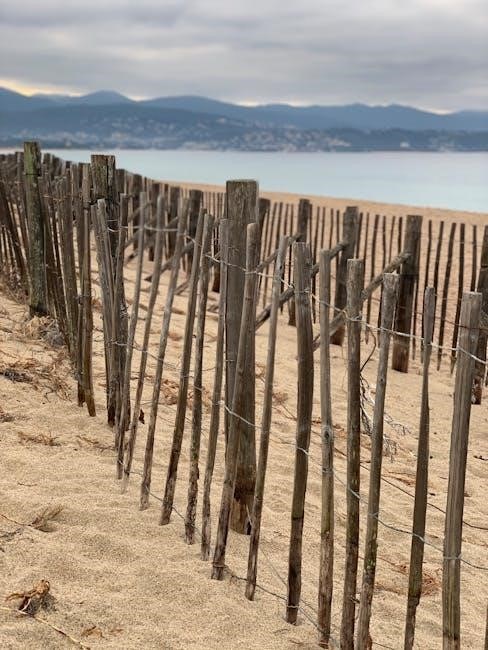
Fences as a Reflection of the Black Experience
Wilson’s Fences, as seen in the dailyscript.com PDF, powerfully portrays 1950s Black life,
highlighting racial barriers and the enduring search for dignity and opportunity.
Representation of Black Life in 1950s America
August Wilson’s Fences, as revealed in the script available on dailyscript.com, offers a strikingly authentic depiction of Black life during the 1950s. The play doesn’t shy away from portraying the limitations imposed by systemic racism, evident in Troy Maxson’s experiences and frustrations. His work as a garbage collector, a profession largely available to Black men at the time, symbolizes the restricted opportunities available.
The dialogue, steeped in vernacular and reflecting the rhythms of everyday Black speech, adds to the play’s realism. The concerns voiced by Troy and Bono – navigating a prejudiced world, securing stable employment, and providing for their families – resonate with the historical realities of the era. The script subtly illustrates the constant negotiation required to exist within a society structured to disadvantage Black individuals, making Fences a vital historical document.
Exploration of Racial Discrimination and its Consequences
The script of Fences, accessible via dailyscript.com, powerfully illustrates the pervasive racial discrimination of the 1950s and its devastating consequences. Troy Maxson’s thwarted baseball ambitions, stemming directly from the color barrier, exemplify the denial of opportunity based solely on race. The casual racism displayed by Mr. Rand, dismissing Troy’s concerns, highlights the everyday indignities faced by Black Americans.
Furthermore, the play subtly reveals how systemic racism impacts familial relationships and individual self-worth. Troy’s bitterness and resentment, born from his experiences, are directly linked to the limitations imposed upon him. The script demonstrates how racial prejudice doesn’t just create external barriers, but also internalizes, shaping perspectives and fueling cycles of conflict and pain within the Black community.

Adaptations of Fences
August Wilson’s Fences saw a notable 2016 film adaptation, bringing the powerful narrative—originally found in scripts like those at dailyscript.com—to a wider audience.
The 2016 Film Adaptation

Denzel Washington’s directorial effort, the 2016 film adaptation of Fences, garnered significant acclaim, faithfully translating August Wilson’s Pulitzer Prize-winning play to the screen. The film, much like the original script available online (dailyscript.com), retains the play’s original dialogue and structure, offering a deeply immersive experience. Washington also starred as Troy Maxson, alongside Viola Davis as Rose, delivering powerful and nuanced performances.
The adaptation’s success lay in its commitment to preserving the play’s theatrical roots while utilizing cinematic techniques to enhance the emotional impact. Critics lauded the film’s exploration of complex themes – racial inequality, familial responsibility, and the shattered American Dream – mirroring the core elements present within the foundational script. The film served as a crucial introduction to Wilson’s work for a new generation, solidifying Fences’ enduring legacy.
Stage Productions and Revivals
Prior to the 2016 film adaptation, Fences enjoyed a rich history on stage, becoming a cornerstone of American theatre. The play’s initial Broadway run in 1987, starring James Earl Jones, was a monumental success, earning numerous awards, including the Pulitzer Prize for Drama and Tony Award for Best Play. The script, readily available online (dailyscript.com), showcases the powerful dialogue that resonated with audiences.
Subsequent revivals, including a critically acclaimed 2010 Broadway production also starring Denzel Washington and LaTanya Richardson Jackson, demonstrated the play’s enduring relevance. These productions consistently highlighted the universality of Wilson’s themes, attracting diverse audiences and solidifying Fences’ place as a timeless masterpiece. Regional theatres continue to stage Fences, ensuring its continued accessibility and impact.