
Divine Command Theory (DCT) posits that morality stems directly from God’s instructions, defining right as what He commands and wrong as what He forbids.
This theory, explored by historical theologians, centers on the idea that moral obligations originate from a prescriptive divine will.
Historical Context of DCT
Historically, the roots of Divine Command Theory trace back to ancient philosophical and theological discussions concerning the source of morality. Early formulations can be found within religious texts and the writings of prominent theologians throughout history.
The concept that morality is defined by God’s instructions gained prominence with the rise of monotheistic religions, particularly Judaism, Christianity, and Islam. Thinkers like Augustine and Aquinas grappled with understanding how divine will relates to ethical principles.
Medieval philosophers extensively debated whether actions are morally good because God commands them, or if God commands them because they are inherently good. This debate forms the core of the Euthyphro dilemma, a pivotal point in DCT’s development.
Core Principles of Divine Command Theory
Divine Command Theory’s central tenet asserts that morality is fundamentally dependent on God’s instructions. Moral obligations aren’t discovered through reason or natural law, but are directly derived from what God commands or forbids.
This implies that without God, there would be no objective morality; ethical truths are contingent upon the divine will. Actions are considered right solely because God commands them, and wrong because He prohibits them.
Furthermore, DCT often assumes God is omniscient, omnipotent, and perfectly good, ensuring His commands are both authoritative and morally sound. This establishes a framework where obedience to God equates to moral behavior.

The Euthyphro Dilemma
The Euthyphro Dilemma, posed by Plato, questions whether actions are morally right because God’s instructions command them, or if God commands them because they are inherently right.
Understanding the Question Posed by Plato
Plato’s Euthyphro Dilemma fundamentally challenges Divine Command Theory by presenting two unsettling possibilities regarding God’s instructions and morality. Does God command actions because they are morally good, implying an independent moral standard to which even God adheres?
Or, conversely, are actions morally good simply because God commands them, suggesting morality is arbitrary and dependent solely on divine will? This isn’t merely a theological debate; it strikes at the heart of understanding moral authority and objectivity. If morality is solely based on God’s commands, it appears susceptible to whim.
Implications of God Commanding Morality
If morality is entirely dependent on God’s instructions, several profound implications arise. Moral truths become contingent upon the divine will, lacking inherent, independent existence. This raises concerns about arbitrariness – could God have commanded cruelty as good, and kindness as evil, rendering those labels solely based on His decree?
Furthermore, it challenges our understanding of God’s nature. Is a truly good God bound by pre-existing moral laws, or does He create morality through His commands? The answer significantly impacts how we perceive divine authority and the foundation of ethical obligations.
Morality Independent of God’s Will
The assertion of morality independent of God’s instructions suggests ethical principles exist objectively, prior to and separate from divine decree. This perspective argues that goodness isn’t created by God, but rather recognized by Him. God, in this view, doesn’t arbitrarily define morality, but acknowledges a pre-existing moral order.
This challenges the core tenet of DCT, proposing that moral truths are discoverable through reason or intuition, not solely through revelation. It implies that even without a divine being, objective moral standards would still hold, grounding ethics in something beyond divine will.

Variations of Divine Command Theory
Divine Command Theory exhibits variations, ranging from God’s instructions as absolute authority to modified versions grounding morality in God’s inherent nature and character.
These approaches explore differing interpretations of the divine will’s role in establishing ethical standards.
Strong DCT: Absolute Divine Authority
Strong Divine Command Theory asserts that morality is entirely dependent on God’s instructions; ethical truths are solely determined by what God commands, with no independent moral standard existing beforehand.
This perspective emphasizes God’s absolute authority and omnipotence, meaning moral obligations arise directly and exclusively from His will.
Actions are not inherently good or evil; they become so simply because God decrees them as such.
Consequently, if God commanded an act traditionally considered immoral, it would become morally right under this framework, highlighting the theory’s reliance on divine decree.
Modified DCT: God’s Nature as a Foundation
Modified Divine Command Theory attempts to address criticisms of the strong version by grounding morality not merely in God’s instructions, but in His inherent nature – His goodness, wisdom, and love.
This approach suggests God’s commands are expressions of His unchanging character, rather than arbitrary decrees.
Therefore, an act is morally right because it aligns with God’s perfect nature, providing a more stable foundation than simply following commands.
It posits that God wouldn’t command something contradictory to His own benevolent essence, offering a response to the arbitrariness concern.
Divine Command Theory and Religious Texts
Divine Command Theory finds significant support within various religious texts, which are often presented as revelations of God’s instructions to humanity.
Scriptural ethics, across faiths, frequently outline moral codes believed to be divinely ordained, dictating acceptable and unacceptable behaviors.
These texts serve as primary sources for understanding what God commands, providing specific guidelines for moral conduct and shaping believers’ ethical frameworks.
Interpretation of these scriptures, however, is crucial, as differing interpretations can lead to diverse ethical applications of DCT.

Criticisms of Divine Command Theory
Criticisms of DCT often center on the potential for arbitrariness if morality solely relies on God’s instructions, questioning its inherent moral authority.
The Problem of Arbitrariness
The core issue revolves around whether morality is simply a matter of God’s instructions, or if there’s an independent standard. If right and wrong are defined by divine command, critics argue, God could arbitrarily decree anything as moral – even acts we intuitively consider evil.
This raises concerns about the nature of moral authority; is it legitimate simply because God commands it? The theory struggles to explain why certain commands are moral, beyond the fact of their divine origin. If God’s will is the sole basis, morality appears contingent and lacks inherent justification, potentially undermining its objectivity.
Challenges to Moral Authority
Divine Command Theory’s reliance on God’s instructions faces significant challenges to its claim of moral authority. If morality is solely based on what God commands, questions arise regarding the source of God’s authority itself. Why should we accept God’s commands as morally binding?
Critics argue that simply asserting divine authority is insufficient; it begs the question. Furthermore, the theory struggles with the potential for conflicting interpretations of divine commands, leading to moral uncertainty. Establishing a reliable and universally accepted method for discerning God’s will proves exceptionally difficult.
The Issue of Conflicting Divine Commands
A critical challenge to Divine Command Theory, rooted in the concept of God’s instructions, arises when considering the possibility of conflicting commands. If morality is defined by what God commands, what happens when interpretations of divine will disagree, or when different scriptures appear to advocate opposing actions?
This creates a significant problem for moral guidance. Resolving such conflicts requires an independent standard outside of God’s commands to adjudicate, undermining the theory’s core premise. The potential for contradictory divine mandates casts doubt on DCT’s ability to provide a consistent moral framework.
Divine Command Theory in Practice
Divine Command Theory, guided by God’s instructions, manifests in scriptural ethics, influencing moral decisions across religions and contemporary issues.
Applying DCT involves interpreting divine commands to navigate complex ethical dilemmas found in everyday life and broader societal concerns.
DCT and Scriptural Ethics
Scriptural ethics are intrinsically linked to Divine Command Theory, as religious texts are often viewed as the primary source of God’s instructions regarding morality.
These scriptures – be they the Bible, Quran, Torah, or others – are interpreted as conveying divine commands that dictate right and wrong actions for believers.
The application of DCT within scriptural ethics involves careful exegesis and hermeneutics to understand the original intent and context of these commands.
However, differing interpretations can lead to diverse ethical frameworks even within the same religious tradition, highlighting the complexities of applying DCT in practice.
Ultimately, scriptural ethics, through the lens of DCT, seeks to align human behavior with perceived divine will.
Applying DCT to Contemporary Moral Issues
Applying Divine Command Theory, rooted in God’s instructions, to modern ethical dilemmas presents significant challenges and opportunities for believers.
Issues like bioethics, environmental concerns, and social justice require interpreting divine commands within a rapidly changing world, often lacking direct scriptural guidance.
Proponents of DCT seek to discern underlying principles within religious texts and apply them to novel situations, believing God’s moral law remains constant.
This often involves reasoning by analogy, considering the spirit of the law rather than strict literal interpretations.
However, this approach can be subjective, leading to differing conclusions even among those sharing the same faith.
DCT in Different Religions
The concept of morality originating from God’s instructions, central to Divine Command Theory, manifests diversely across religions.
In Abrahamic faiths – Judaism, Christianity, and Islam – divine commands are primarily revealed through scripture and prophetic tradition, shaping ethical codes.
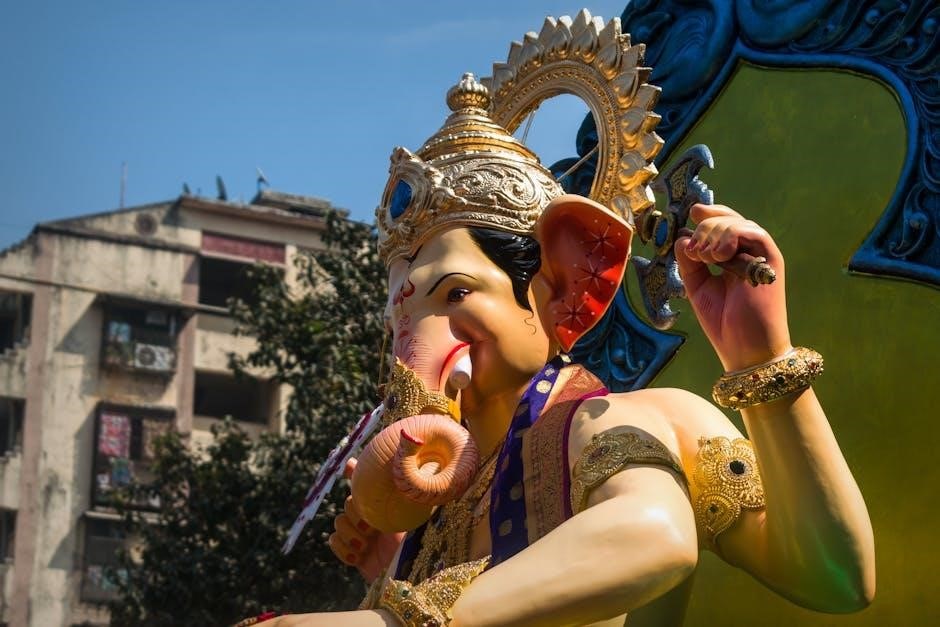
Hinduism emphasizes dharma, a cosmic order often linked to divine will, influencing moral duties and societal structures.
Buddhism, while less focused on a commanding deity, emphasizes ethical conduct aligned with universal principles discovered through enlightenment.
Each religion interprets and applies divine guidance uniquely, reflecting cultural contexts and theological nuances.
DCT Compared to Other Ethical Theories
Divine Command Theory, rooted in God’s instructions, contrasts with theories like Utilitarianism (pleasure-based) and Deontology (duty-based), offering a theocentric moral framework.
Divine Command Theory vs. Utilitarianism
Divine Command Theory (DCT), grounded in God’s instructions, fundamentally differs from Utilitarianism. DCT asserts morality originates from divine will, defining right and wrong based on obedience to God’s commands, irrespective of consequences.
Conversely, Utilitarianism, a naturalistic alternative, judges actions by their ability to maximize overall happiness or pleasure. While DCT prioritizes divine authority, Utilitarianism focuses on outcomes. A DCT proponent might deem an action moral solely because God commands it, even if it produces suffering, a stance Utilitarianism would reject.
This highlights a core divergence: DCT is theocentric, while Utilitarianism is anthropocentric.
Divine Command Theory vs. Deontology
Divine Command Theory (DCT), rooted in God’s instructions, contrasts with Deontology, which emphasizes moral duties and rules. DCT locates the source of morality in God’s will – actions are right because God commands them, not due to inherent qualities.
Deontology, however, posits that moral obligations are derived from rational principles, like Kant’s categorical imperative, independent of divine decree. While both theories emphasize rules, their foundations differ. DCT’s rules are divinely ordained, while Deontology’s are rationally discovered.
A deontologist might follow a rule regardless of God’s command, unlike a DCT adherent.
Divine Command Theory vs. Ethical Egoism
Divine Command Theory (DCT), based on God’s instructions, fundamentally clashes with Ethical Egoism. DCT asserts morality centers on obedience to divine will, prioritizing actions aligned with God’s commands, potentially requiring self-sacrifice.
Ethical Egoism, conversely, champions self-interest as the ultimate moral principle. Actions are deemed right if they maximize one’s own good, regardless of divine law or the welfare of others. DCT demands adherence to a higher authority, while Egoism prioritizes individual benefit.
A DCT believer might act against self-interest to obey God, a concept alien to Ethical Egoism.

Divine Command Theory and Moral Relativism
Divine Command Theory, rooted in God’s instructions, offers a potential counter to moral relativism by proposing objective moral truths grounded in divine authority.
It asserts a form of moral objectivism, contrasting with culturally relative ethical standards.
Addressing the Concerns of Cultural Relativism
Cultural relativism suggests morality varies across societies, lacking universal standards. However, Divine Command Theory (DCT), based on God’s instructions, directly challenges this notion.
DCT proposes morality isn’t determined by cultural consensus but by an objective, external source – God’s will. This provides a framework for evaluating moral claims independent of societal norms.
If morality originates from divine commands, it transcends cultural boundaries, offering a basis for judging practices as objectively right or wrong, regardless of cultural acceptance. This doesn’t necessarily dismiss cultural context, but establishes a higher moral authority.
DCT as a Form of Moral Objectivism
Divine Command Theory (DCT) firmly establishes itself as a form of moral objectivism, asserting that moral truths exist independently of human opinion or cultural acceptance, rooted in God’s instructions.
Unlike subjective or relativistic views, DCT grounds morality in an external, unchanging reality – the divine will. This implies that moral principles aren’t created by humans but discovered through divine revelation.
Consequently, actions aren’t morally right simply because a society approves, but because they align with God’s commands. This objective standard provides a universal moral framework, transcending individual preferences and cultural variations.

Case Studies & Examples
Films like Frailty, Hotel Rwanda, and The Cider House Rules explore complex ethical dilemmas, often questioning actions justified by interpretations of God’s instructions.
Frailty (2001) ⏤ A Cinematic Exploration
Frailty (2001) presents a disturbing case study of a father who believes he receives God’s instructions to destroy “demons” disguised as humans.
The film dramatically portrays the dangers of subjective interpretation and the potential for horrific acts when individuals believe they are directly enacting divine will. It forces viewers to confront the question of whether obedience to perceived God’s instructions can ever justify violence, even if motivated by sincere religious conviction.
The narrative challenges the audience to grapple with the ethical implications of acting on faith without external verification, highlighting the potential for misinterpreting divine guidance.
Hotel Rwanda (2004) ⏤ Ethical Dilemmas
Hotel Rwanda (2004) presents harrowing ethical dilemmas during the Rwandan genocide, subtly questioning the role of faith and perceived God’s instructions in inaction.
While not explicitly focused on divine command, the film illustrates how societal structures and individual beliefs can override moral obligations, even for those with strong religious convictions. The protagonist’s actions, driven by a desire to protect his family, raise questions about prioritizing human life over abstract notions of obedience to perceived God’s instructions.
The film implicitly asks: where is God’s command in the face of such immense suffering?
The Cider House Rules ⏤ Moral Complexity
The Cider House Rules explores profound moral ambiguity, particularly surrounding abortion, prompting reflection on whether actions align with perceived God’s instructions or compassionate human judgment.
The film doesn’t offer easy answers, instead presenting a nuanced portrayal of a character performing illegal abortions out of empathy and a belief in alleviating suffering. This challenges a strictly Divine Command interpretation, where morality is solely dictated by divine decree.
The narrative subtly questions if following rigid God’s instructions always leads to the most ethical outcome, or if context and compassion should also guide moral decisions.

The Role of Divine Will
Divine will, central to DCT, manifests as God’s instructions – prescriptive acts defining morality. Analyzing this intersection reveals potential conflicts between authority and arbitrariness.
God’s Commands as Prescriptive Acts
God’s instructions, within Divine Command Theory, aren’t merely descriptive of an independent moral order; they create moral obligations. These commands function as prescriptive acts, actively establishing what is right and wrong.
This means morality isn’t discovered, but rather decreed by the divine will. The very act of God commanding something imbues it with moral weight.
Consequently, the focus shifts from seeking inherent goodness to understanding and obeying these divine directives. The authority resides solely in the command itself, not in any pre-existing moral standard.
This perspective fundamentally alters the nature of ethical inquiry, prioritizing obedience to God’s instructions above all else.
Analyzing the Intersection of Arbitrariness and Authority
A central challenge within Divine Command Theory lies in analyzing the intersection of arbitrariness and authority regarding God’s instructions. If morality solely depends on divine command, what prevents God from commanding something inherently cruel or unjust?
Critics argue this introduces an element of arbitrariness, where moral values become contingent upon God’s will, rather than grounded in reason or inherent goodness.
However, proponents emphasize God’s perfect nature, asserting that His commands are necessarily good, thus negating the possibility of arbitrary decrees.
The debate centers on whether divine authority guarantees moral goodness, or if it merely defines it, raising profound questions about the foundation of ethical principles and God’s instructions.

Divine Command Theory and Christian Thought
Divine Command Theory, deeply rooted in Christian history, views God’s instructions as the ultimate source of moral authority, shaping theological perspectives on ethics.
Exploring sources of authority reveals a long tradition of grappling with divine will and its implications.
Sources of Moral Authority in Christian History
Throughout Christian history, identifying the primary source of moral authority has been a complex and evolving discussion. Early Church Fathers often grounded ethics in God’s instructions, revealed through scripture and interpreted through tradition.
The Old Testament’s Ten Commandments served as a foundational moral code, directly attributed to divine decree. Later, New Testament teachings, particularly those of Jesus, emphasized love and compassion as central ethical principles, still understood as reflecting God’s will.
Medieval theologians, like Augustine and Aquinas, integrated faith and reason, arguing that natural law – discoverable through human reason – ultimately originated from God’s eternal law. This interplay between divine revelation and human intellect shaped centuries of Christian ethical thought, always referencing God’s instructions as the ultimate standard.
Theological Perspectives on DCT
Theological interpretations of Divine Command Theory (DCT) vary significantly within Christianity. Some perspectives emphasize God’s absolute sovereignty, asserting that morality is entirely dependent on God’s instructions, with no independent moral standard.
Others propose that God’s commands reflect His inherently good nature, suggesting a foundation for morality within God Himself, rather than arbitrary decree. This modified DCT attempts to address criticisms regarding arbitrariness.
Still others integrate natural law theology, viewing God’s instructions as revealing a pre-existing moral order accessible through reason. These diverse viewpoints demonstrate the ongoing debate surrounding the relationship between divine will and moral obligation within Christian thought.
Naturalism and Non-Naturalism in Relation to DCT
Naturalism, like utilitarianism, grounds morality in observable phenomena, contrasting with DCT’s reliance on God’s instructions. Non-naturalism, such as intuitionism, offers an alternative moral foundation.
Utilitarianism as a Naturalistic Alternative
Utilitarianism presents a stark contrast to Divine Command Theory, functioning as a distinctly naturalistic alternative. Unlike DCT, which anchors morality in God’s instructions and a divine will, utilitarianism locates the source of ethical value within the natural world – specifically, in the consequences of actions.
It asserts that the morally right action is the one that maximizes overall happiness and minimizes suffering. This framework doesn’t require belief in a deity or adherence to divine decrees; instead, it relies on empirical observation and a rational assessment of outcomes. Therefore, it bypasses the need for interpreting God’s instructions altogether.
This focus on observable consequences distinguishes it as a naturalistic approach, grounded in the natural world rather than supernatural authority.
Intuitionism as a Non-Naturalistic Alternative
Intuitionism offers a non-naturalistic alternative to Divine Command Theory, diverging significantly from grounding morality in God’s instructions. Instead of divine decrees, intuitionism proposes that moral truths are grasped through a faculty of moral intuition – an inherent ability to perceive what is right or wrong.
These moral truths are considered objective and independent of both natural facts and divine commands. Unlike utilitarianism’s focus on consequences, or DCT’s reliance on a deity, intuitionism asserts that we simply know certain actions are morally permissible or impermissible.
This “knowing” isn’t derived from experience or God’s instructions, but from a direct apprehension of moral principles, making it a non-naturalistic ethical stance.

Contemporary Relevance of Divine Command Theory
Divine Command Theory, rooted in God’s instructions, continues to fuel ethical debates today, prompting ongoing discussions about morality’s foundation and future.
Its relevance persists in modern ethical thought.
Ongoing Debates and Discussions
Ongoing debates surrounding Divine Command Theory frequently center on interpreting God’s instructions and their application to complex modern issues. Scholars grapple with questions of moral authority, particularly when faced with conflicting interpretations of religious texts or differing divine commands across faiths.
Discussions also explore whether morality genuinely requires a divine source, or if ethical principles can stand independently. The theory’s potential for arbitrariness – the idea that God could command anything, even acts we deem inherently wrong – remains a significant point of contention. Contemporary relevance hinges on navigating these challenges.
The Future of DCT in Ethical Thought
The future of Divine Command Theory likely involves continued refinement and adaptation in response to evolving societal norms and philosophical challenges concerning God’s instructions. Expect increased focus on reconciling DCT with concepts like human rights and universal moral values.
Further exploration of modified DCT, emphasizing God’s inherent nature rather than arbitrary commands, may gain traction. Interdisciplinary dialogue – integrating theology, philosophy, and even fields like psychology – will be crucial. Ultimately, DCT’s enduring relevance depends on its ability to address contemporary ethical dilemmas persuasively.